
Have you ever wondered why your vitamin D levels stay low—even though you’re taking supplements or getting plenty of sunshine?
It turns out, there’s a missing piece in the puzzle: your body might not be able to use the vitamin D you’re getting. And the root cause has to do with how your body handles calcium.
What Vitamin D Really Does
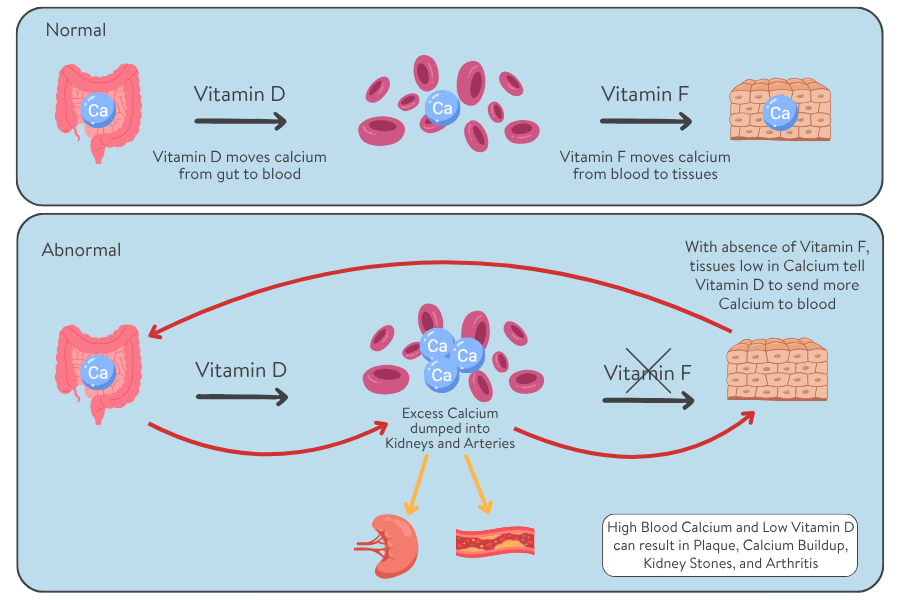
Vitamin D plays a key role in moving calcium from your gut into your bloodstream. But here’s the kicker: it doesn’t help move that calcium into your bones and tissues. That next crucial step requires a different nutrient—Vitamin F.

Vitamin F (found in cruciferous vegetables like broccoli, Brussels sprouts, and cauliflower) helps transport calcium from your bloodstream into your tissues—right where your body needs it.
If you’re lacking in vitamin F, calcium can get “stuck” in your bloodstream. This not only keeps your vitamin D levels chronically low, but it can also lead to more serious issues like:
Kidney stones – the body tries to flush out excess calcium through the kidneys.
Calcium buildup in arteries and teeth – a sign that calcium is going to the wrong places.
Muscle cramps – especially in the calves or hamstrings.
Low bone density – osteopenia or osteoporosis.
Itching skin – sign tissues are lacking calcium
Sunburns? It Might Be a Calcium Issue
Did you know that your skin’s ability to tolerate the sun is affected by calcium in the tissue?
If your skin burns easily—even though you’re usually fine in the sun—it may be due to low calcium in the skin tissue. This affects your body’s ability to convert sunlight into usable vitamin D.
What Can You Do?
Boost your intake of cruciferous vegetables – broccoli, cauliflower, Brussels sprouts, etc.
Boost your intake of high quality polyunsaturated fats – grass fed butter and meat
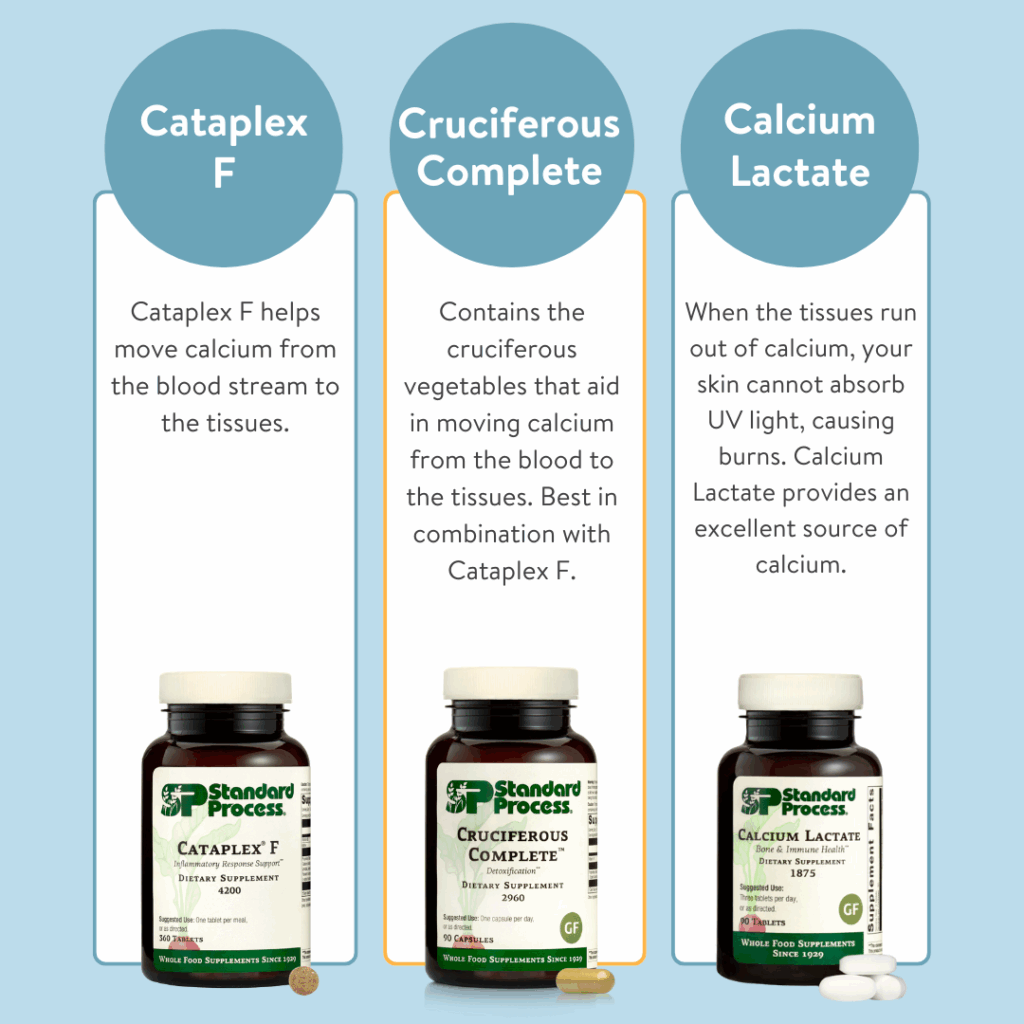
Consider whole food supplements – We recommend Cataplex F or Cruciferous Complete, which are concentrated sources of vitamin F.
Support calcium absorption with Cataplex F + Calcium Lactate – especially before sun exposure to help your body process vitamin D efficiently.
How Do You Know If You Need This?
Some signs that you’re not getting calcium into your tissues include:
Chronically low vitamin D despite supplementation
Frequent sunburns or sensitivity to sunlight
Muscle cramps or spasms
Early signs of osteoporosis or osteopenia
Calcium deposits on teeth or in arteries
Itchy skin
The Takeaway
If you’re constantly struggling with low vitamin D levels, the issue likely goes deeper than just your D supplement. It’s a calcium-utilization problem— and vitamin F could be the missing link.
Rather than just throwing more vitamin D at the problem, it’s time to get to the root of the issue.
Not sure if this is for you? Book a Functional Nutrition evaluation with Dr. Hannegan!